

1
Direct to Film (DTF) vs Screen Printing: Complete Cost & Durability Comparison for Custom Apparel
By Liliet Corona, Embellishway
In the realm of custom apparel printing, “Direct to Film (DTF)” and screen printing stand out as two popular methodologies, each offering unique benefits and limitations. Understanding the differences between these techniques is crucial for businesses and individuals looking to create high-quality products. This article provides a comprehensive cost and durability comparison between DTF and screen printing, focusing on their operational mechanics and advantages. With the rise of personalization in fashion and marketing, the choice between these two methods can significantly impact both budget and product quality. We will delve into cost considerations, durability factors, and the specific contexts in which each printing method excels.
Cost Comparison:
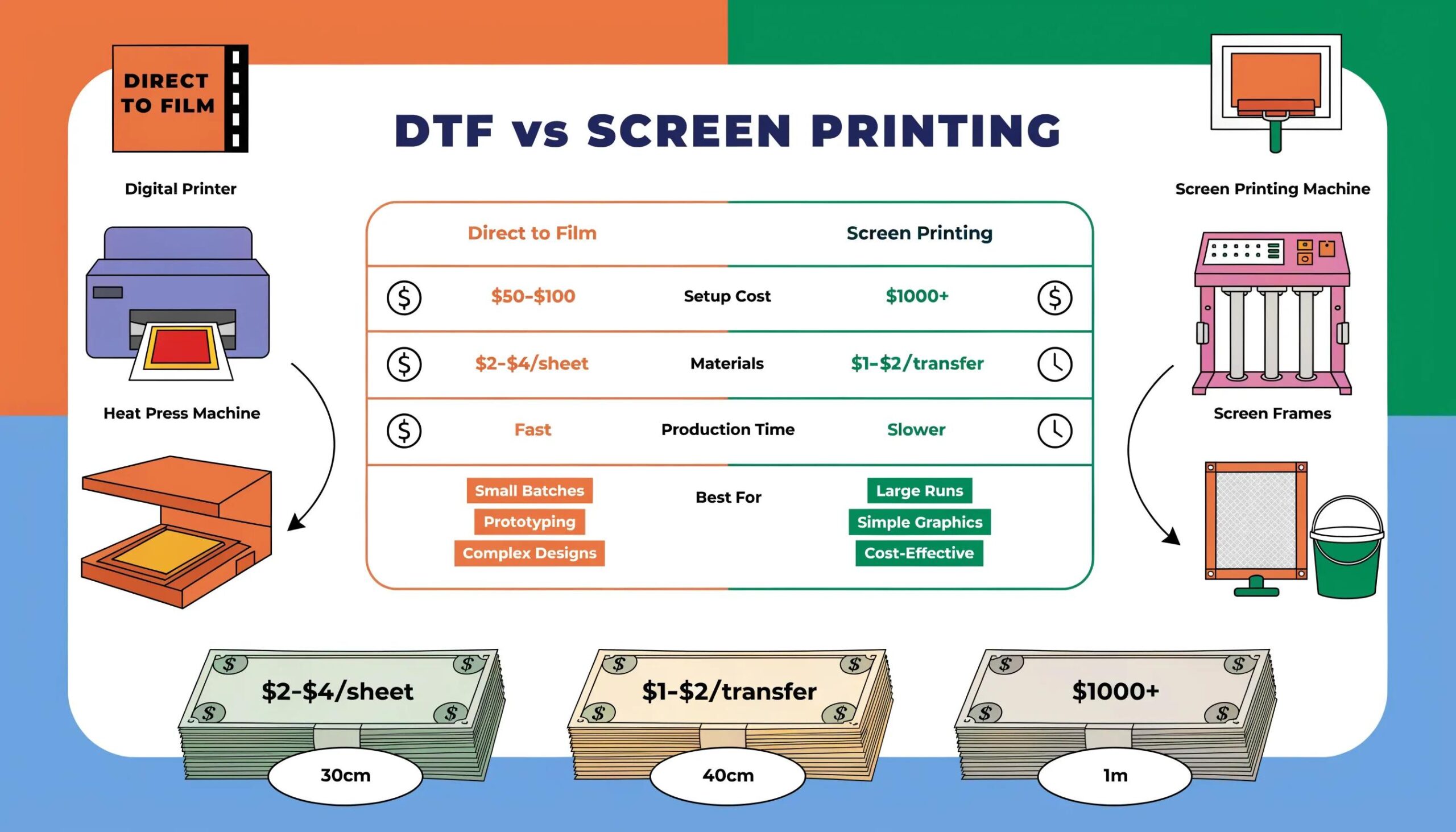
When assessing printing processes, cost is often the first consideration. DTF printing generally has lower equipment and setup expenses compared to traditional “screen printing”, especially for small to medium-sized orders. Here are the primary cost distinctions:
- Setup Costs: Screen printing often entails significant upfront costs for equipment and custom screens, which can be a barrier for small businesses or short-run projects.
- Cost per Unit: DTF tends to be more cost-effective per unit for smaller orders since each design can be printed without the extensive setup associated with screen printing.
- Bulk Orders: However, for large volume orders, screen printing’s unit costs can decrease significantly due to economies of scale, potentially making it the more attractive option for large batch productions.
Embellishway offers both DTF and screen printing services, ensuring that customers receive tailored solutions that fit their specific needs and budgets.
Durability Comparison:
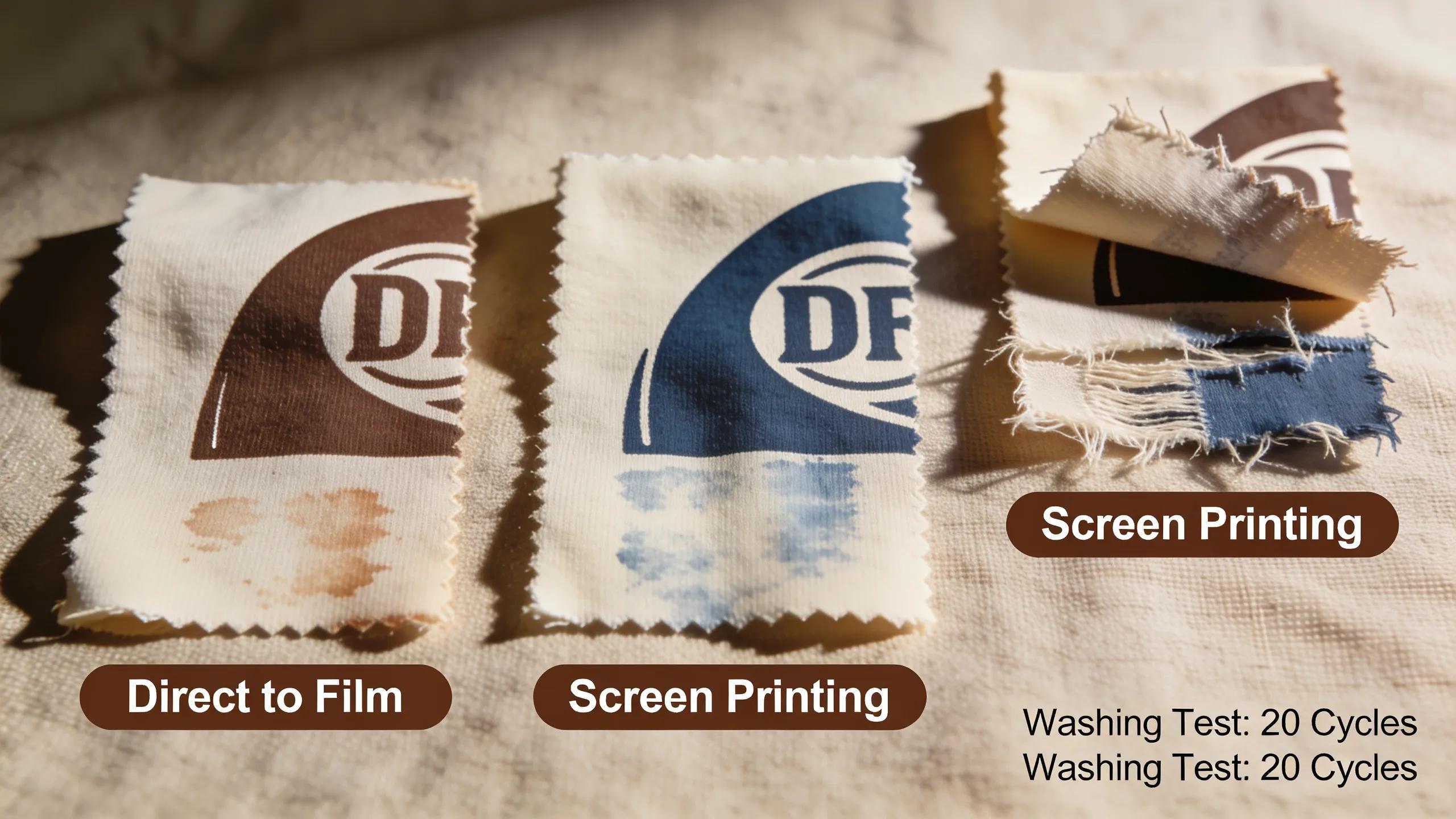
Durability is another critical factor when comparing DTF and screen printing. The “longevity and resistance” to wear and tear can influence a customer’s choice of printing method.
- Screen Printing: Known for its exceptional durability, screen printing provides designs that withstand multiple washes without significant fading or cracking. This method is particularly effective for bulk apparel items, where longevity is paramount.
- DTF Printing: The durability of DTF prints varies depending on the quality of the transfer films and inks used. When executed with high-quality materials, DTF can also offer impressive durability, but it may not match the robustness typically associated with screen printing.
- Fabric Impact: Different fabrics can also impact the durability of DTF and screen prints. For example, DTF works well on a variety of fabrics but may have reduced longevity on highly elastic materials compared to screen prints, which generally adapt well to such textiles.
To ensure maximum durability with DTF, proper application techniques remain the most vital factor for end-product quality.
Optimizing Heat Press Parameters for Durable DTF Printing
Statistical analysis using ANOVA showed that press temperature is the dominant factor across all quality metrics. Results demonstrate that setting the press to 170 degrees C with a 10 second dwell time minimizes color change (delta E), reduces black density loss, and limits white-layer contamination for both granulates tested. Optimizing Heat Press Parameters to Improve the Quality of DTF Printing, 2025
To visualize durability comparisons, the table below summarizes the expected lifespan and performance characteristics for both printing methods across various fabric types.
Advantages and Disadvantages:
Each printing method comes with its own set of pros and cons that should be considered before deciding which is best for your project.
- Screen Printing Advantages: High durability and vivid colors, making it suitable for long-lasting items.Lower cost per unit for large orders, making it an economical choice for bulk production.
- Screen Printing Disadvantages: Higher initial setup costs and longer turnaround times for small orders.Limited flexibility in design complexity; intricate details may not print as well.
- DTF Advantages: Lower setup costs and quicker turnaround times for small to medium orders.Capable of printing complex images with gradients and multiple colors without requiring additional setup.
- DTF Disadvantages: Varying durability based on the quality of inks and transfer films used.Potentially higher costs per unit for large orders compared to screen printing due to individual transfers.
These characteristics make it essential to assess your specific needs before selecting a printing method.
What are the key cost factors differentiating DTF and Screen Printing?
Understanding the key cost drivers for each technique helps businesses and individuals make informed decisions on which printing method to choose for their custom apparel. The following points highlight these cost factors:
- Material Costs: DTF relies on specialized films and inks, which can vary in price and affect overall project costs. Screen printing uses inks with pigments that offer longevity but require additional setup.
- Labor Costs: The labor involved in preparing screens for screen printing can add up, whereas DTF is more automated and may command lower labor costs.
- Order Size: For small orders, DTF can be more economical. However, as order sizes increase, screen printing may offer better pricing structures due to bulk processing efficiencies.
How does DTF printing price compare for small vs bulk orders?
DTF printing pricing scales quite effectively for small orders. Typically, the setup involves minimal upfront costs, making it a suitable choice for short runs. For example, DTF can be priced per design without the need for extensive preparation.
In contrast, for bulk orders, screen printing opportunities may provide lower per-unit pricing, but this requires a sufficient minimum order volume to justify the initial investment in setup and screens. Thus, understanding demand and product turnover is crucial in order-size determination.
What screen printing costs apply based on volume and setup?
Screen printing costs usually include the following components:
- Setup Fees: These cover the costs of creating screens, which can range from $30 to $100 per color design. The more colors used, the higher the setup costs.
- Per Unit Costs: These decrease significantly as the order volume increases. Typically, larger orders can bring costs down to approximately $5-$10 per shirt depending on the complexity of the design.
- Additional Charges: Items like specialty inks or processes, such as discharge or metallic inks, can incur additional charges that users need to factor in when estimating total costs.
How do durability and quality differ between DTF and screen printing?
Durability is a defining feature in assessing the quality of printed apparel. Screen printing’s solid color coverage results in vibrant designs that resist fading and cracking over time. Conversely, DTF printing, while offering color vibrancy and greater design flexibility, may exhibit varying durability based on quality and application.
Understanding these durability aspects will enable customers to select the most appropriate printing technique that aligns with their desired product outcome and usage scenarios.
What is the expected lifespan of DTF printing on various fabrics?
The lifespan of DTF printing is influenced by factors such as fabric composition and print quality consistency. Generally, for cotton and polyester fabrics, DTF offers an excellent choice but emphasizes the need for high-quality inks and transfer films to ensure expected durability.
- Cotton: Lasts about 2-4 years based on proper washing and care instructions.
- Polyester: Similar to cotton, particularly strong when using high-quality DTF transfers.
- Blends: Performance varies, typically lasting 1-3 years depending on the blend and application method.
How does screen printing durability perform over time and use?
Screen printing is often favored for its enduring qualities. Generally, customers can expect a lifespan of 5 years or more for properly cared garments. Screen prints maintain their integrity through multiple washes and retain color vibrancy, especially on natural cotton fabrics.
- The robust nature of screen printing makes it an ideal solution for items subject to rigorous washing, such as uniforms and promotional materials.
Which printing method is best suited for different apparel and branding needs?
Choosing the right printing method hinges on understanding specific branding requirements. Screen printing is ideal for large orders where durability is essential. Businesses focused on promotional events often prefer it due to its cost-effectiveness at scale.
DTF printing suits businesses that require rapid production of small orders or highly complex designs. Its flexibility can accommodate rapid turnaround times for events that demand customization or personalization.
When is DTF printing recommended for custom apparel designs?
DTF printing is recommended in scenarios where intricate design detail is crucial, such as full-color graphics or gradients, without imposing additional costs. It provides scalability for fashion-focused brands that rotate collections frequently and require quick adjustments in design output.
This method is particularly beneficial for small businesses just entering the custom apparel market, as it allows for experimentation with design without significant upfront investments.
What are the advantages of screen printing for bulk promotional items?
Screen printing’s advantages shine when dealing with bulk promotional items. The setup costs become diluted across larger volumes, resulting in compelling savings per unit.
- Efficiency: Faster printing times after setup enable robust production output.
- Quality Consistency: Ensures that bulk orders maintain uniformity in design and color, crucial for branding.
- Longevity: With lasting durability, promotional items retain their appearance after repeated use, enhancing brand visibility over time.
What recent industry trends and updates affect DTF and screen printing choices?
In recent years, both DTF and screen printing have seen advancements that affect decision-making:
- Technological Innovations: Improved DTF inks and films have enhanced durability and design fidelity, providing users with better results.
- Sustainability Trends: Eco-friendly inks and practices have gained traction, with companies exploring options that minimize environmental impact across printing methods.
- Market Demand: As personalization continues to grow, demand for versatile production methods like DTF is expected to rise.
How have DTF printing costs and technology evolved by 2026?
As of 2026, DTF technology has become more accessible, leading to prices that align competitively with screen printing—especially for shorter production runs. Advances in printing technology have enabled smaller business operations to offer quality DTF prints at prices valid for entry-level budgets.
- This evolution reflects a broader trend toward affordability in the custom apparel industry, allowing greater variety and innovation in product offerings.
What hybrid printing approaches combine benefits of both methods?
Hybrid printing is emerging as a solution to combine the strengths of DTF and screen printing. This approach allows for the best of both worlds—utilizing the vibrancy and durability of screen prints with the design flexibility and cost-effectiveness of DTF.
- For example, starting with a potent base screen print and layering DTF for detailed imagery can create unique product offerings suitable for niche markets or special editions.
Pingback: Custom Apparel Plainfield IL: DTF & Screen in Plainfield, Illinois – Embellishway