
1
DTF vs Screen Printing: Which Method Wins?
Screen printing, DTF, HTV, and DTG each suit different needs: screen printing offers durability for bulk orders, DTF transfers work across fabric types with strong color vibrancy, HTV cuts custom vinyl designs for small runs, and DTG prints detailed, full-color graphics directly onto garments. Embellishway guides clients through selecting the method matching order size, fabric, and design complexity.
Key Takeaways
- DTF printing delivers vibrant, detailed designs on various fabric types with minimal setup costs compared to screen printing.
- Screen printing requires four separate screens for full-color designs, making it ideal for high-volume orders of 100+ units.
- HTV transfers offer durability and flexibility on cotton and polyester blends, perfect for personalized apparel projects.
- DTG printing produces photographic-quality images directly onto garments, eliminating film and screen preparation steps entirely.
What Are the Core Apparel Printing Methods?
Three techniques dominate custom apparel production: screen printing, direct to film vs DTG alternatives, and heat transfer vinyl. Screen printing has long served as the industry standard for bulk, high-durability orders. DTG and DTF represent newer digital alternatives, built for design flexibility and shorter runs.
Each method handles the design-to-garment journey differently.
How does DTF printing actually work?
DTF printing prints a design onto special film first. The film gets coated with adhesive powder, cured under heat, then pressed onto the garment. This layered process is central to any dtf vs screen printing comparison. It separates image creation from the pressing step.
What makes DTG different from screen printing?
DTG sprays water-based inks directly onto fabric, much like an inkjet printer works on paper. No film, no powder, no mesh screens, just ink meeting cloth directly.
Decorators weighing htv vs dtf transfers or sorting through apparel decoration methods compared side by side benefit from understanding these mechanical differences before ordering. Embellishway offers both screen printing and DTF services alongside custom embroidery, giving brand owners a single studio for evaluating which process suits their next run. Choosing the best custom t shirt printing method starts with knowing how each one is built, not just how it looks on the shirt.
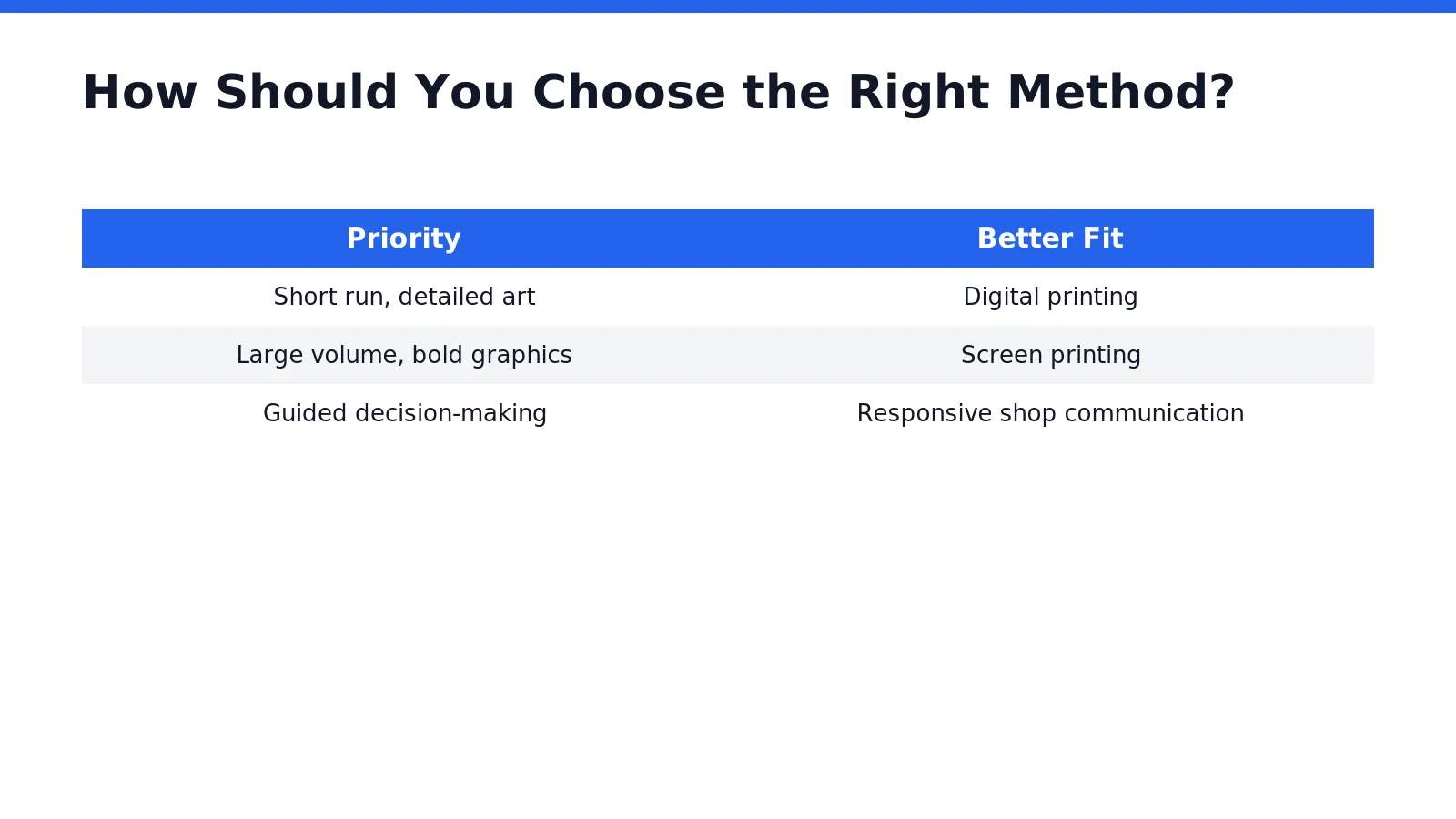
How Should You Choose the Right Method?
Order size and design complexity determine the best custom t shirt printing method for any given project. Small, detailed runs favor digital printing, while large, simple-graphic orders favor traditional screen work. Matching the job to the method, rather than picking a favorite technique first, keeps cost and quality aligned.
Direct-to-garment printing handles small batches and multi-color, detailed artwork well, since it runs on demand with no setup costs involved. Screen printing flips that equation: it rewards volume, with the cost per piece dropping as quantities climb, making it the stronger fit for bulk team or event orders featuring bold, simple designs.
Which method works best for a mixed-size team order?
Buyers outfitting a roster that spans baby, kids, and adult sizing need a shop built for that range. Embellishway’s one-stop sizing setup lets a single decoration approach cover an entire family or team without splitting the order across vendors.
Reviewing apparel decoration methods compared side by side helps clarify the trade-offs:
Embellishway’s customers cite fast, thorough communication throughout production, a factor that matters as much as the technique itself when results need to look right the first time.
Why Choose Embellishway for Your Apparel Project?
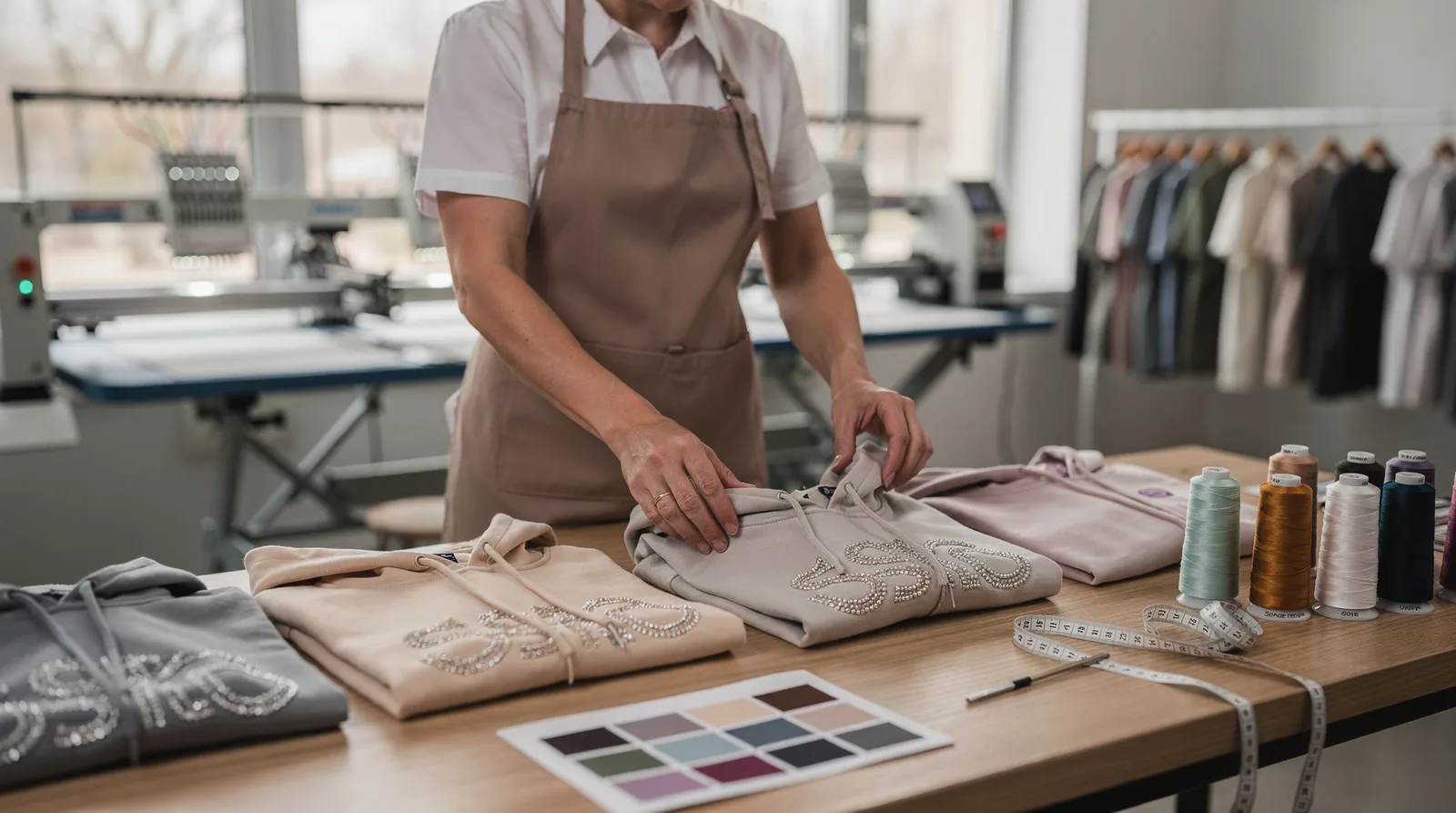
Embellishway earns consideration through a combined service model built for apparel decoration decisions. Embroidery, printing, and graphic design support sit under one roof, removing the need to juggle separate vendors when weighing apparel decoration methods compared side by side.
Located in Plainfield, Illinois, the studio serves local businesses and online customers alike. That local footprint matters for brand owners who want an ongoing working relationship rather than a single transaction.
Design readiness separates a strong project from a stalled one. Embellishway’s in-house design support, including digitizing and vector image creation, prepares artwork. It performs correctly on the finished piece, whatever the best custom t shirt printing method turns out to be for a given order.
Do customers actually recommend Embellishway?
Feedback points to steady satisfaction rather than one-off luck. One completed order drew praise for fair pricing and a stated plan to reorder. Another described a genuinely challenging branding project handled with careful attention from concept through delivery.
What this means for buyers comparing decorators:
- Comprehensive service cuts down on vendor handoffs and miscommunication
- Local Plainfield presence supports repeat collaboration, not just a single order
- In-house design team preps artwork correctly before it ever reaches embroidery or print
- Customer feedback reflects fair pricing and dependable finished results
Together, these factors give brand owners a decorator built for long-term partnership, not just a single production run.
FAQ
Which printing method suits bulk orders best?
Screen printing suits bulk orders best since it rewards volume, with cost per piece dropping as quantities climb, making it ideal for high-volume orders of 100+ units with bold, simple designs.
What is the main advantage of DTF printing?
DTF printing delivers vibrant, detailed designs across various fabric types with minimal setup costs, using a layered process where the design prints onto film before pressing onto the garment.
How does DTG printing differ from other methods?
DTG sprays water-based inks directly onto fabric like an inkjet printer, eliminating film, powder, and mesh screens, producing photographic-quality images directly onto garments.
Conclusion
In closing, selecting the right apparel printing method depends on your specific needs, whether you prioritize durability, color vibrancy, production speed, or budget efficiency. Each technique delivers distinct advantages: screen printing offers longevity and bold results for bulk orders, DTF printing provides versatility and quick turnaround, HTV suits simple designs with excellent washability, and DTG captures photographic detail on demand. By understanding how these methods align with your project goals, you can make an informed choice that elevates your brand and delivers the quality your customers expect.