

1
Custom Apparel Artwork Checklist: Pre-Production Guide
Sep
A production-ready checklist confirms final artwork files, transfer or print dimensions, color counts, and quantities before submission to Embellishway. Clients should specify garment sizes—baby, kids, and adult—method (embroidery, screen printing, or DTF), and deadlines upfront. Clear file formats and approved proofs prevent reprints, delays, and mismatched colors during bulk or custom apparel production runs.
Key Takeaways
Confirm final artwork version, transfer dimensions, and quantity before creating your order.
Organize design specifications and order format details to prevent production delays and errors.
Prepare all artwork files with proper resolution and color settings for optimal print quality.
Review complete order details at Embellishway in Plainfield, IL before submitting for production.
What Do You Need Before Submitting Artwork?
Finished, production-ready files answer this question. A print ready art guide treats artwork as a production input, not a casual attachment. Files must be locked before an order enters the queue. Skipping this step risks delays, blurry prints, or a rejected proof.
Small business owners and event coordinators benefit from having a physical studio to rely on. Embellishway’s Plainfield, IL location gives clients a place to drop off files or review proofs in person before production starts. That face-to-face check catches problems a screen or email thread might miss.
Because embroidery, screen printing, and DTF services all run through one studio, brand managers can confirm which technique suits their design before finalizing a [custom apparel artwork checklist](https://embellishway.com). This matters most for logos with fine text or gradient shading, which behave differently across methods.
Does the studio help fix artwork problems?
Yes. Embellishway pairs embroidery and printing with in-house graphic design support, so incomplete or low-resolution files get corrected before production. This one-stop setup means:
Custom apparel production prep happens under one roof, not across multiple vendors
Embroidery file preparation and print formatting get reviewed by the same team
Screen printing artwork guidelines are checked against the chosen technique before approval
That coordination protects turnaround time and final product quality alike.
How Do You Prepare Print-Ready Files And Specs?
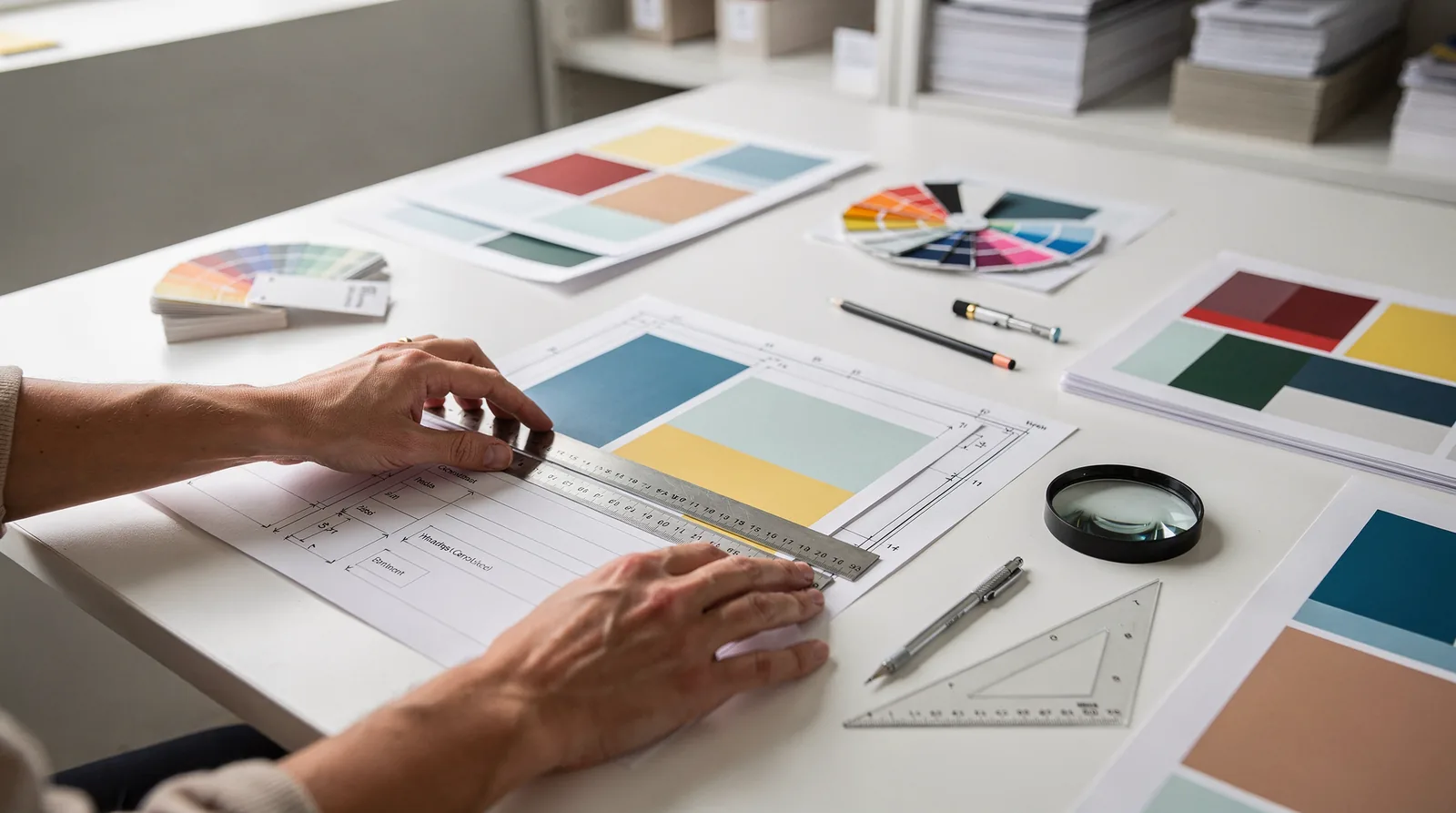
Print-ready files require correct formatting, the right file type, and material choices matched to the printing method. A custom apparel artwork checklist confirms these details before production starts, protecting both quality and garment durability. Skipping this step risks blurry logos, mismatched colors, or a design that cracks after a few washes.
Formatting standards differ by technique, which is why screen printing artwork guidelines exist separately from digital file rules. Material selection matters just as much as the artwork file itself. A fabric blend that works for one print method may reject ink or thread from another. Getting both right the first time avoids reprints and wasted turnaround.
Does Each Design Need Its Own Order Details?
Yes. Each unique design counts as a separate order, so sizing, quantity, and file specs need confirmation individually. This step in custom apparel production prep prevents mixed-up quantities across multiple designs in one bulk request.
What Happens During Embroidery File Setup?
Embroidery file preparation benefits from a proof review before any stitching begins. Because the studio operates from Plainfield, IL, brand managers can request an in-person check on sizing and placement ahead of production.
Working from a single studio also simplifies the print ready art guide process across methods:
Embroidery for hats, patches, and hoodies
Screen printing for bulk apparel runs
DTF transfers for detailed, full-color graphics
One point of contact matches each design to the right method without juggling separate vendors.
What Mistakes Delay Custom Apparel Production?
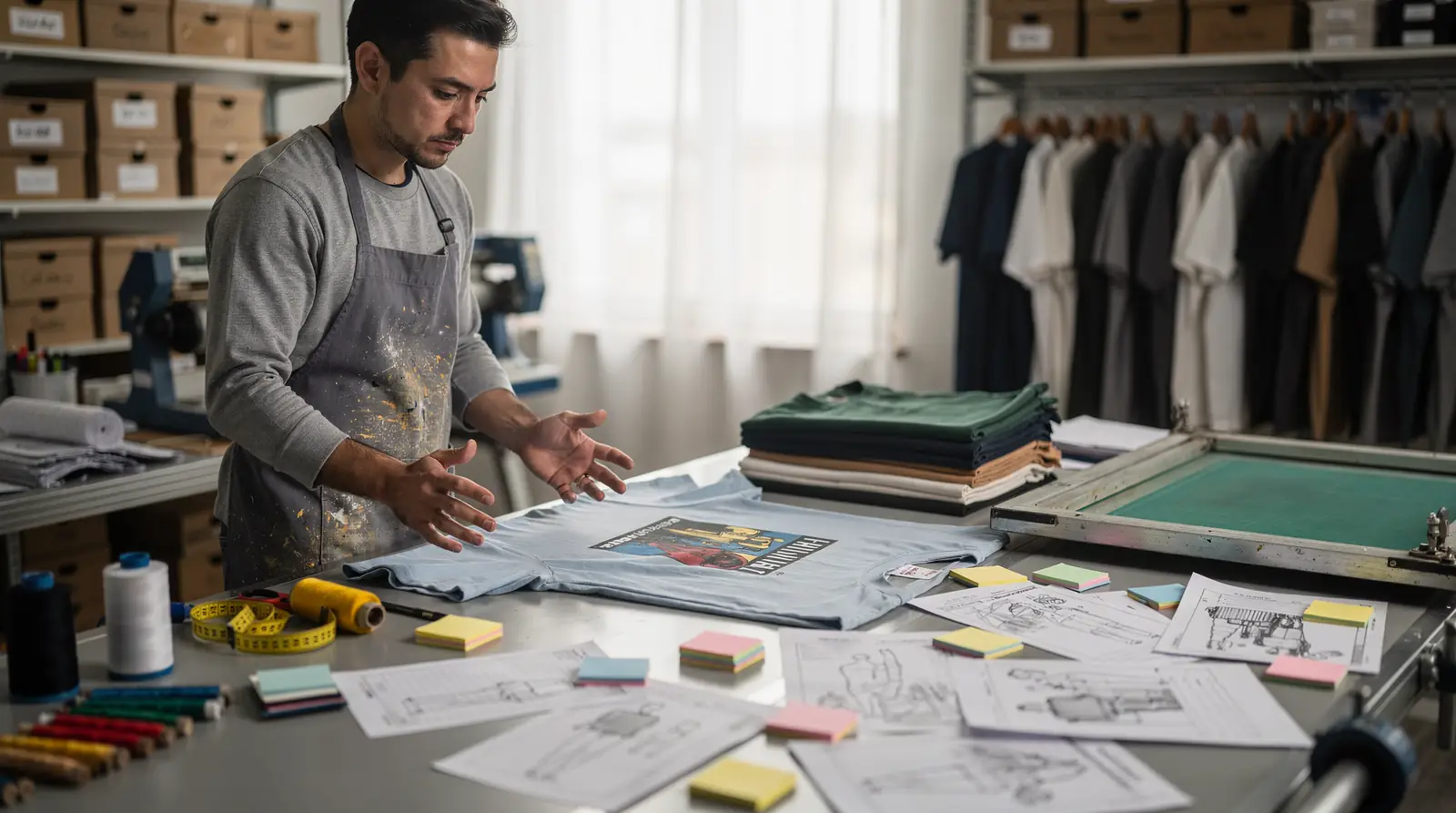
Skipped steps cause most production delays. Missing even one item in a custom apparel artwork checklist can lead to reprints, delayed shipments, and dissatisfied customers, according to DIYPRINTZ’s guide on custom apparel production. Small oversights early on rarely stay small once a file enters production.
Why does unfinished artwork slow down an order?
Files that skip proper screen printing artwork guidelines or embroidery file preparation often reach production incomplete. Design support built into the process helps catch these issues before they become costly, since combining graphic design expertise with printing and embroidery services keeps problems visible early rather than surfacing mid-run.
What happens when a mistake is caught mid-production?
Because embroidery, screen printing, and DTF work run through a single studio, an error found during proofing gets corrected without a vendor handoff. That structure limits added delay compared to juggling separate suppliers for each service.
Common culprits behind stalled orders include:
Incomplete or last-minute artwork submissions
Skipping proof approval before production begins
Unclear specifications for placement, size, or color
A thorough custom apparel production prep routine, paired with a reliable print ready art guide, keeps small errors from turning into shipment delays.
FAQ
What should you confirm before submitting artwork to Embellishway?
Confirm the final artwork version, transfer or print dimensions, color counts, quantities, garment sizes, and production method (embroidery, screen printing, or DTF) along with deadlines before submission.
Can Embellishway fix incomplete or low-resolution artwork files?
Yes. Embellishway’s in-house graphic design support corrects incomplete or low-resolution files before production, with embroidery and print formatting reviewed by the same team at their Plainfield, IL studio.
Does each design in a bulk order need separate specifications?
Yes. Each unique design counts as a separate order, requiring individual confirmation of sizing, quantity, and file specs to prevent mixed-up quantities across multiple designs.
Conclusion
In closing, a thorough artwork preparation and production checklist transforms your vision into a finished product that reflects your standards and intent. By addressing file specifications, design clarity, and production requirements upfront, you eliminate delays and ensure each piece meets your expectations. Whether you’re ordering a single custom item or a bulk run, this systematic approach protects your investment and delivers results that embellish your brand with precision and care.