

1
Custom Embroidered Caps: Professional Solutions for Personalized Logo Hat Designs
By Liliet Corona, Embellishway
Custom embroidered caps serve as an effective platform for brand promotion and personal expression. By combining quality materials with innovative embroidery techniques, these caps allow businesses, individuals, and organizations to showcase their logos in a unique and eye-catching manner. This article explores cap custom embroidery, discussing various cap types, embroidery suitability, and popular methods, while also highlighting how these elements combine to enhance your branding efforts.
Types of Caps Available
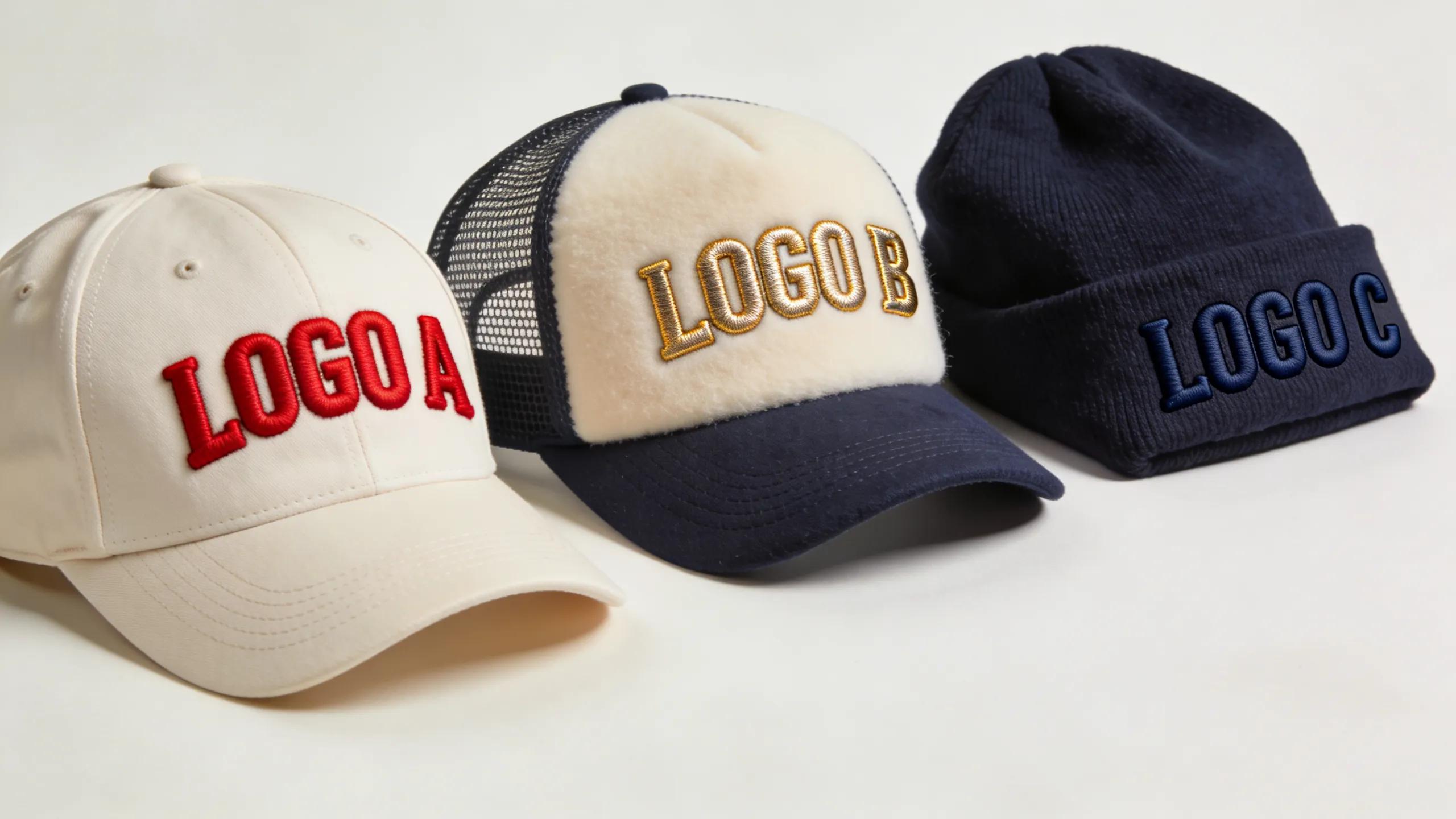
When considering custom embroidery, it’s essential to choose the right type of cap. Each style offers distinct characteristics that cater to different preferences and functional needs.
Baseball Caps: A classic choice, perfect for casual branding and everyday wear. Their structured front allows for a prominent display of logos.
Trucker Hats: These caps provide breathability thanks to their mesh back, making them ideal for outdoor events and summer use while allowing for larger logo designs.
Beanies: Offering a cozy fit, beanies are best suited for smaller, more subtle designs, perfect for winter apparel.
Understanding the variety in cap styles is crucial for effective branding. The next section will delve into how these styles can influence the suitability of embroidery techniques.
Cap Styles and Placement Guide
Choosing the perfect cap style is a foundational step in creating visually appealing and functional custom embroidered caps. Here’s a detailed guide to popular cap styles and the best embroidery placements to maximize your logo’s impact.
Structured vs. Unstructured Hats
Structured Hats feature a reinforced front panel that holds its shape, creating a smooth and firm surface for embroidery. This type is ideal for designs requiring clarity and bold visuals, as the fabric doesn’t sag under the stitches.
Unstructured Hats are softer with no reinforced front panels, resulting in a more relaxed fit. While embroidery is still effective, the design may have a slightly curved or natural shape, lending a casual, laid-back appearance.
5-Panel vs. 6-Panel Caps
5-Panel Caps have a distinct single front panel made of one piece of fabric, offering a clean canvas best suited for front and center embroidery. They are popular in streetwear and promotional merchandise.
6-Panel Caps consist of six fabric sections, including a front center seam, giving the cap more curvature. Embroidery can be applied on each panel, but design continuity across seams can be challenging.
Trucker Hats
Featuring a foam or cotton front and breathable mesh back panels, trucker hats provide a large, prominent front panel perfect for eye-catching embroidery. Their mesh backs also offer potential for side or back arch logo placements for additional branding.
Snapbacks
Snapbacks are structured caps with a flat brim and adjustable snap closure. The firm front panel makes them ideal for bold front center embroidery, especially with 3D puff techniques. Side and back embroidery options are also viable but less common.
Dad Hats
Known for a low profile and soft unstructured fit, dad hats typically have a curved brim and adjustable strap. They best suit smaller flat stitch embroidery, often placed front center or on the side panel for understated branding.
Beanies
Beanies offer a snug fit designed for warmth rather than structure. Embroidery here tends to be smaller and flatter, usually positioned on the front fold or cuff, emphasizing subtlety and comfort.
Optimal Embroidery Placement Locations
Front Center Panel: The most common and visible location, perfect for primary logos and bold branding statements.
Left/Right Side Panels: Ideal for secondary logos, slogans, or smaller accent designs that complement the main branding.
Back Arch: Located above the closure, this space suits smaller embroidery like website URLs, team names, or taglines.
Brim or Visor: Some caps allow subtle embroidery on the top or edge of the brim for a unique branding touch.
Back Closure Strap: Adjustable straps can feature embroidered text or small logos to reinforce branding.
Understanding these styles and placements will help in tailoring your cap design for maximum impact and practical wearability.
Differences between 3D Puff Embroidery and Flat Embroidery for Headwear
Embroidery style significantly affects the appearance and feel of your custom caps. Two dominant embroidery techniques for headwear are 3D puff embroidery and flat embroidery, each with distinct characteristics, applications, and limitations.
3D Puff Embroidery
Also called raised embroidery, 3D puff uses a foam backing placed underneath the stitches to create a raised, dimensional effect. This technique brings logos and designs to life by adding texture and depth, making them highly noticeable.
Stitch Density: Requires high stitch density to cover the foam completely, ensuring a smooth, sturdy finish without gaps.
Backing: Foam backing is essential and must be compatible with the cap’s fabric; not all materials support puff embroidery well.
Design Restrictions: Best suited for bold, simple designs or logos. Fine details and thin lines are difficult to achieve due to the three-dimensional nature and foam thickness.
Use Cases: Excellent for snapbacks, structured hats, and styles with firm panels where the raised effect can maintain its shape and visibility.
Flat Embroidery
Flat embroidery lays stitches directly on the fabric, creating a smooth and subtle design that integrates closely with the cap material.
Stitch Density: Utilizes varied stitch densities based on design complexity but generally less dense than 3D puff.
Backing: Uses standard embroidery backing materials that help stabilize stitches without adding bulk.
Design Restrictions: Suitable for intricate logos, detailed artwork, and text requiring clarity and precision.
Use Cases: Ideal for dad hats, beanies, and other soft or unstructured caps where raised embroidery may not hold well.
Choosing between these techniques depends on your branding goals, cap style, and design complexity. For bold, standout logos on structured caps, 3D puff is an excellent choice, while flat embroidery suits detailed and subtle applications.
Thread Selection and Durability: Choosing the Right Thread for Your Custom Caps
The type of thread used in embroidery influences not only the visual appeal but also the longevity and durability of your custom caps. Here’s an overview of the most common thread types and how they affect your product.
Madeira and Polyester Threads
Polyester threads are the industry standard for custom embroidered caps due to their high durability, colorfastness, and resistance to UV rays, chlorine, and abrasion. They maintain vibrant colors even after repeated washing and outdoor use.
Madeira
Rayon Threads
Rayon threads offer a high sheen and silky finish, resulting in a luxurious look. However, they are less durable than polyester, prone to fading over time, especially with exposure to sunlight and frequent washing. They are best suited for caps intended for limited use or indoor environments.
Colorfastness and Care Instructions
Use polyester or Madeira threads for caps exposed to sunlight or outdoor conditions to avoid premature fading.
Hand washing or gentle machine cycles with cold water will extend the life of embroidered caps.
Avoid harsh detergents, bleach, and excessive heat when cleaning to maintain thread vibrancy and fabric integrity.
Store caps in a dry environment away from direct sunlight when not in use to preserve embroidery quality.
Investing in high-quality threads ensures your branded caps withstand everyday wear and continue to look professional for years to come.
Step-by-Step Custom Ordering & Digitizing Guide
Creating custom embroidered caps involves a precise process that efficiently converts your logo into a stitched masterpiece. Understanding the ordering and digitizing steps will help you prepare your files and expectations for a smooth production experience.
Step 1: File Preparation
Embroidery requires vector-based or high-resolution logo files with clearly defined lines and colors. Preferred formats include AI, EPS, or PDF for original artwork. Avoid pixelated or low-resolution images as they reduce embroidery quality.
Step 2: Digitizing Format
Digitizing converts your graphic into stitch commands compatible with embroidery machines. The two common embroidery file formats are:
DST: Standard file format containing stitch information without color or thread details, widely accepted in embroidery shops.
EMB: Native format for embroidery software, containing layers, colors, and stitch data, useful for editing and adjustment.
Professional digitizers optimize stitch types, density, and sequence to ensure the logo is accurately represented and suitable for the selected cap style.
Step 3: Stitch Count Calculation
The stitch count represents the total number of stitches required to complete your design and is a direct factor in pricing and production time. Complex designs with high detail and colors tend to have higher stitch counts, impacting turnaround.
Step 4: Minimum Line Thickness for Hats
To maintain clarity and durability, minimum line thickness should be respected. For hats, lines thinner than 1mm may not embroider well and can appear inconsistent or get lost on the fabric. Digitizers adjust designs to meet these minimums.
Step 5: Turnaround Times
Standard turnaround for custom embroidered caps ranges from 7 to 14 business days, depending on order size and complexity. Rush services may be available at an additional cost.
Step 6: Bulk Quantity Discounts
Ordering larger quantities typically results in lower per-cap pricing as setup costs spread over the order and efficiencies improve. Discuss quantity breaks with your supplier to maximize value.
Following these steps ensures your custom embroidered caps reflect your brand vision with precision while optimizing cost and delivery time.
Differences in Embroidery Suitability
Different cap styles can significantly affect the embroidery options available. Selecting the right combination ensures that the final product meets aesthetic and functional expectations.
Baseball Caps: These versatile caps are suitable for various embroidery types, including flat and raised designs. The sturdiness of the fabric supports detailed stitching.
Snapbacks: Featuring a flat brim, these caps work exceptionally well with 3D puff embroidery, which adds depth and makes logos stand out.
Dad Hats: Known for their relaxed fit, dad hats are better suited for flatter embroidery techniques, providing a clean and understated look.
This understanding of suitability helps guide the decision-making process toward the optimal cap selection for your embroidery needs. In the following section, we will identify the best cap styles for showcasing logos effectively.
Best Cap Styles for Showcasing Logo Embroidery
Not all caps are created equal when it comes to showcasing embroidered logos. Certain styles enhance visibility and aesthetics more than others.
Trucker Hats: The mesh back allows for ventilation while providing ample space on the front panel for detailed embroidery.
Baseball Caps: Their structured design ensures that logos are prominently displayed, making them ideal for corporate branding.
Snapbacks: These caps allow for larger designs that can capture attention, especially in vibrant colors.
Choosing the right cap style is critical to ensuring that your logo or design is both visible and appealing. After selecting a suitable cap style, understanding popular embroidery methods can enhance the quality of the final product.
Popular Embroidery Methods
Embroidery techniques play a vital role in the final appearance of custom caps. Different methods can greatly influence the overall look and feel of the embroidery.
Understanding these methods can help in making informed choices about how designs will be executed. For businesses looking to achieve high-quality results, exploring these embroidery methods is essential.