

1
Embroidery Digitizing: File Formats & Setup
Sep
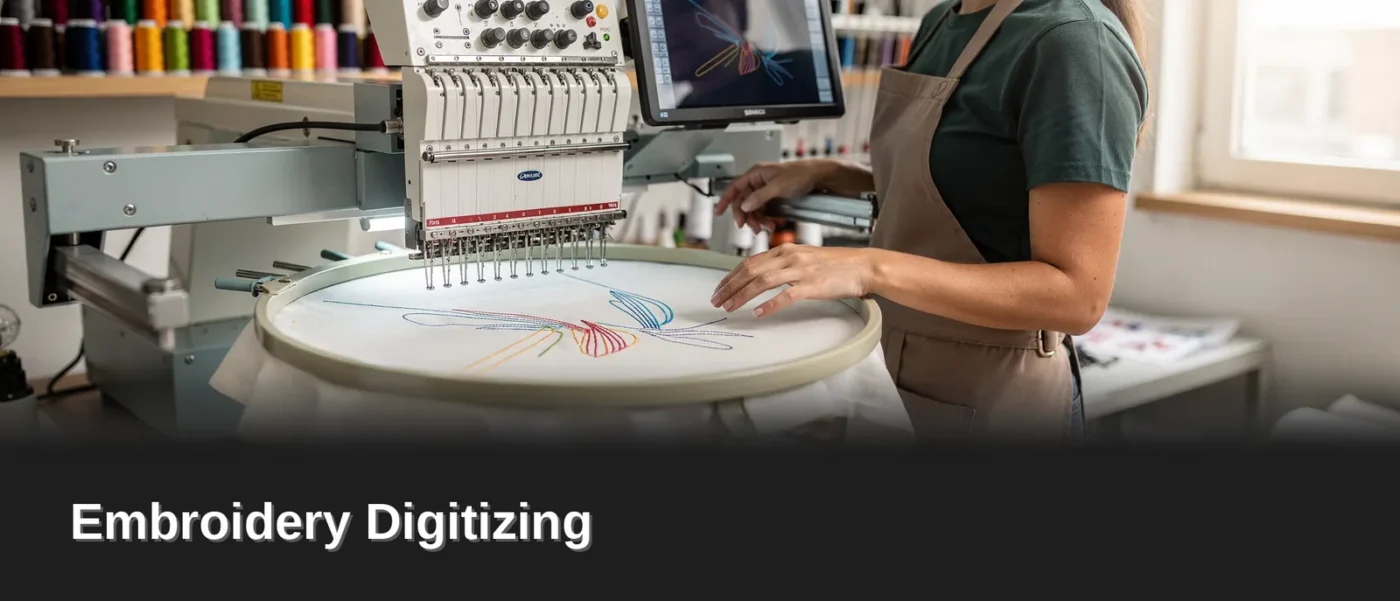
Embroidery digitizing converts artwork into stitch files like DST, PES, or EXP formats readable by embroidery machines. Stitch counts determine cost and production time, while proper artwork setup requires vector files with clean lines. Embellishway, based in Plainfield, IL, specializes in precise digitizing for accurate, high-quality embroidery results.
Digitizing success depends on choosing the correct file format, DST for most commercial machines, PES for home embroidery, since each stores stitch, color, and trim instructions differently. Embellishway, based in Plainfield, IL, offers rush digitizing in 1 to 2 hours at no extra charge, serving USA, Canada, UK, and Australia.
Successful embroidery digitizing depends on three factors: correct file format (DST for most commercial machines, PES for home embroidery systems), appropriate stitch density for the fabric, and artwork prepared as clean vector files before digitizing begins. Embellishway’s digitizing process converts raw designs into stitch-ready files, ensuring embroidered patches, hats, and hoodies stitch cleanly without thread breaks or puckering.
Key Takeaways
- Embroidery machines require specific file formats to properly read and stitch your digitized designs accurately.
- Stitch density directly impacts thread breaks, machine errors, and the final quality of embroidered artwork, which is why comparing designs against stitch count benchmarks helps maintain consistent results.
- Embellishway offers 1 to 2 hour rush digitizing with no extra charge across USA, Canada, UK, Australia.
- Vector artwork setup determines which file formats work best and what editing capabilities remain available afterward.
What Does Embroidery Digitizing Actually Involve?
Embroidery digitizing converts artwork into a machine-readable file containing stitch instructions, not a standard picture format. A needle cannot follow a JPG or PNG the way a human eye reads a logo. Ordinary image files show color and shape, but they carry no data about stitch direction, sequence, or thread changes. Digitizing translates that visual information into precise machine movements, so a design becomes something an embroidery machine can actually execute.
This translation step happens before any needle touches fabric, and it shapes how the finished piece looks and wears. Poorly digitized files lead to puckering, gaps, or thread breaks. Well-built ones stitch cleanly and hold their shape through repeated washing.
Why Can’t a Machine Just Read a Regular Logo File?
Embroidery machines lack the ability to interpret artwork visually the way a printer or screen would. Instead, they rely on coded instructions telling the needle where to move, when to change color, and when to trim. A logo saved as a photo or PDF means nothing to the machine until a digitizer builds that stitch map from scratch.
For small businesses and apparel creators managing branded orders, this groundwork matters more than it might seem. Embellishway’s design offerings include digitizing alongside vector image creation and logo development, giving clients support before production ever begins. Positioned as a one-stop shop for elevating business brand presence, the studio pairs that design groundwork with embroidery, printing, and web services, helping clients move from concept to finished garment without juggling separate vendors for each step.
Which Embroidery File Formats And Stitch Specs Matter?
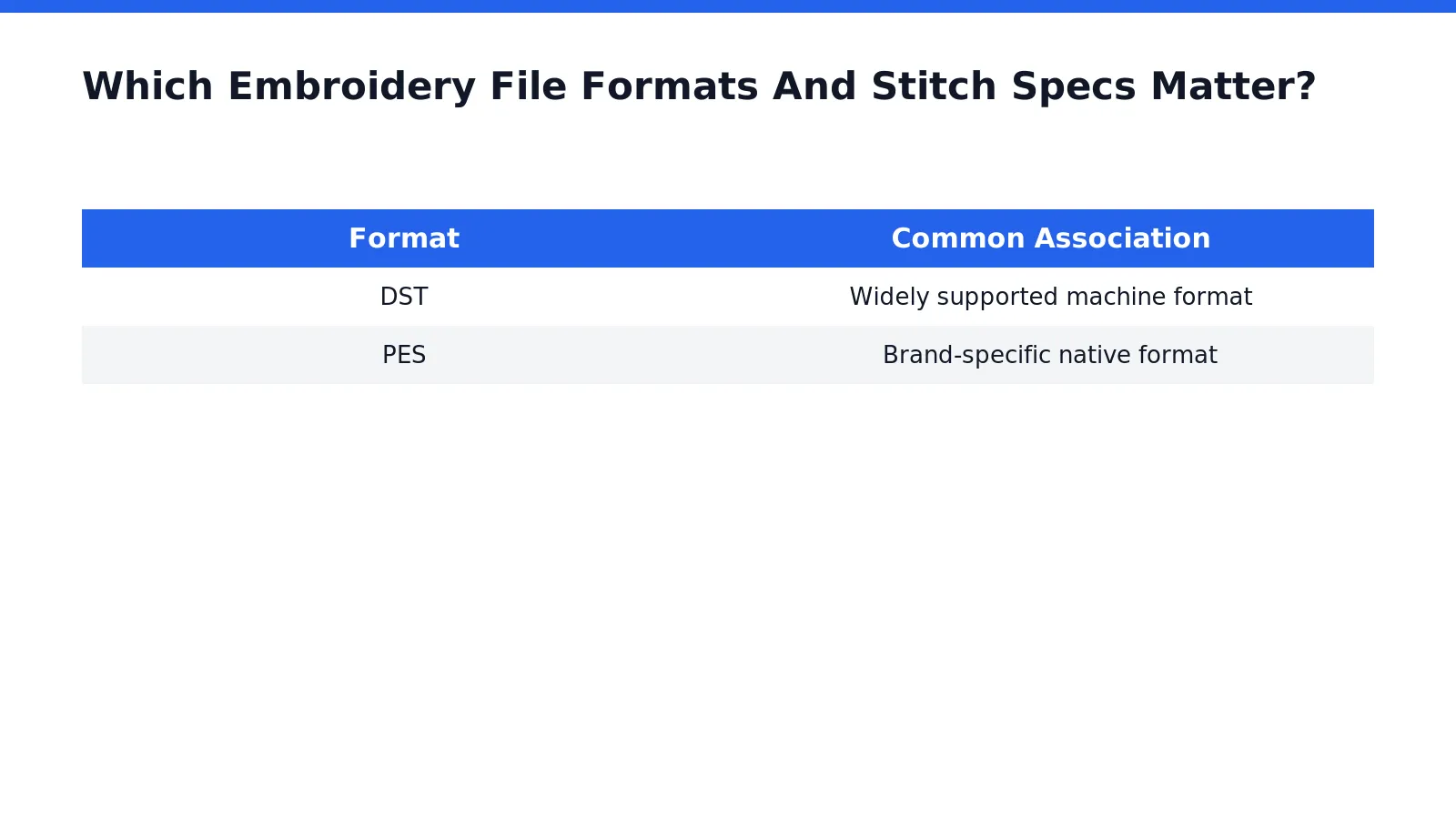
File format determines whether a machine can read a design at all. Embroidery file formats exist because each design must be saved in the exact format a specific machine brand can stitch, not just any digital file. A logo that looks perfect on screen still needs translation into stitch instructions before a needle moves.
Clean output starts earlier than most clients expect, at the artwork stage. Preparing artwork as a scalable vector file, rather than a flattened photo or screenshot, keeps edges crisp and colors separated for accurate digitizing, meeting the vector file requirements digitizers need to work efficiently. This step, part of a broader design workflow that also covers logo creation and general graphic design, feeds directly into cleaner stitch results and fewer revisions later.
Why Aren’t DST And PES Files Interchangeable?
A DST file and a PES file can represent identical artwork and still behave completely differently on different machines. Machine brands like Brother or Bernina each rely on their own native file formats, so a design built for one often won’t load correctly on another. Matching the format to the machine avoids stitch-out errors before a single piece of thread is used.
Confirming machine compatibility upfront saves time, materials, and reprint costs down the line.
How Do You Choose The Right Digitizing Partner?
Selecting a digitizing partner comes down to three factors: communication speed, production quality, and pricing consistency. Reviews of Embellishway’s work point to all three, giving small business owners and team managers a clear benchmark for what to expect from a studio handling embroidery digitizing work.
Fast, thorough communication matters most when deadlines are tight. One customer noted that updates arrived quickly throughout the order, and the finished embroidery matched what had been promised. That kind of reliability reduces the guesswork apparel creators face when converting artwork into stitch-ready files.
Attention to detail on complex projects separates a dependable studio from a risky one. A client working on a challenging project praised the professional handling and precision shown from start to finish. That standard applies whether the job involves apartment vs 3D puff embroidery, multi-color logos, or fine text.
Does location affect quality or turnaround?
Embellishway operates from a production base in Plainfield, Illinois. A local studio setup supports hands-on quality checks before designs ship.
Is pricing consistency a reliable signal?
Yes. A repeat customer described the pricing as fair and confirmed plans to order again, suggesting steady value across multiple projects rather than a one-time deal.
Decision checklist:
- Response time on proofs and revisions
- Evidence of careful, professional handling on detailed designs
- Consistent, fair pricing across repeat orders
FAQ
Why does file format matter so much in embroidery digitizing?
Each machine brand reads a specific format, DST works for most commercial machines, while PES suits home embroidery systems. Choosing the wrong format means the machine cannot properly stitch, color, or trim the design.
Can a machine embroider directly from a JPG or logo photo?
No, machines only follow coded stitch instructions, not visual images. A digitizer must build a stitch map from scratch since photos and PDFs carry no stitch direction, sequence, or thread-change data.
Where is Embellishway located, and what digitizing turnaround do they offer?
Embellishway is based in Plainfield, IL, United States. They offer rush digitizing completed in 1 to 2 hours at no extra charge, serving clients across the USA, Canada, UK, and Australia.
Conclusion
In closing, mastering embroidery digitizing requires attention to file formats, stitch counts, and artwork preparation, each element working together to transform your design into a finished piece that reflects your vision and brand identity. By understanding these foundational principles and applying them thoughtfully to your projects, you position yourself to achieve consistent, professional results that stand the test of time. Whether you’re creating patches, apparel, or promotional items, the care you invest in digitizing pays dividends in quality and durability.