

Custom Embroidery
Custom Material Printing Solutions
Custom Material Printing Solutions: A Complete Guide by Embellishway
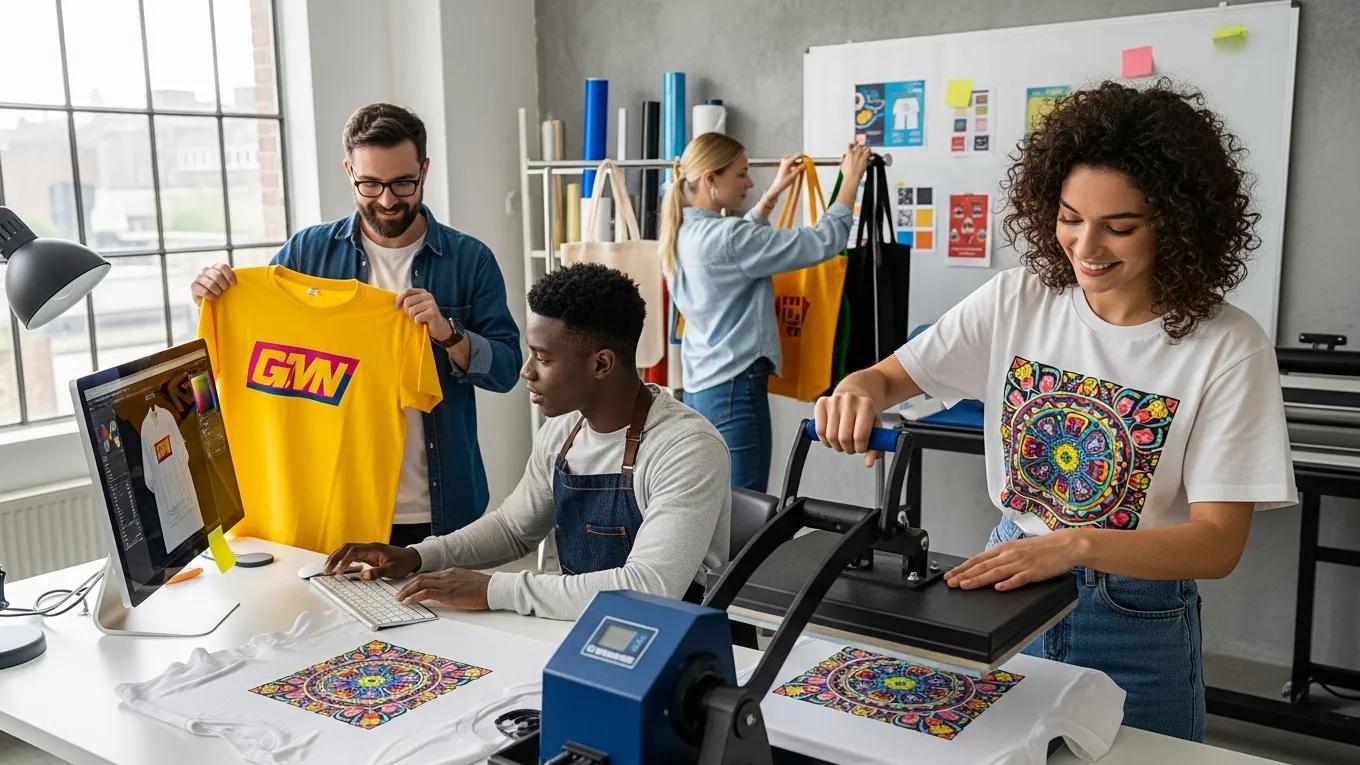
By Liliet Corona, Embellishway
Custom material printing has surged in popularity, offering individuals and businesses alike the ability to express their unique identity through personalized designs. This comprehensive guide dives into the world of custom material printing, outlining what it entails, different printing methods available, and how to select the right services for your needs. Whether you are looking to enhance your personal brand or create promotional materials, understanding your options is essential. The rise of customized printing solutions caters to a growing desire for personal expression and branding, making it easier than ever to showcase individuality. Throughout this article, we will explore various printing techniques, discuss factors to consider when choosing printing services, and highlight the benefits of personalization across different industries.
Overview of Customized Printing Solutions
Customized printing solutions have transformed how individuals and businesses convey their identities and messages. With advancements in technology, printing has evolved beyond traditional methods, enabling a wide range of personalized options. This shift is not just a trend but reflects a deep-rooted desire for unique expressions in branding and personal endeavors. Whether it’s for marketing materials, clothing, or specialized gifts, customized printing empowers users to interact directly with their brand narrative. The versatility is evident as industries capitalize on this innovation to meet diverse consumer demands for distinct aesthetic appeal.
Recent innovations in textile printing, including digital and 3D methods, are transforming traditional processes and opening new creative opportunities, as outlined in an upcoming publication.
Innovations in Textile Printing: Digital, 3D, and Sustainable Methods 1. The textile industry has experienced substantial progress in printing technologies, thereby transforming conventional processes and fostering novel creative opportunities. This chapter offers a comprehensive review of recent innovations in textile printing techniques, encompassing both digital and traditional methodologies. It investigates the integration of digital technologies, such as inkjet and 3D printing, which have fundamentally altered design versatility, accuracy, and environmental responsibility. Furthermore, advancements in environmentally conscious practices, including aqueous inks and sustainable materials, are examined in relation to their ecological impact. The chapter also deliberates on the prospective capacity of these innovative techniques to reshape the forthcoming landscape of textile manufacturing and design. Recent Advances in Textile Printing Techniques, MBU Rabbi, 2025
Professional Printing Methods and Techniques

Various printing methods cater to different needs, each carrying unique advantages and applications. Here’s a breakdown of common printing techniques:
| Technique | Benefits | Best Uses |
|---|---|---|
| Screen Printing | Durable and vibrant results | Perfect for large quantities and promotional items |
| Direct-to-Garment (DTG) | High-resolution prints, ideal for intricate designs | Excellent for small batches and complex graphics |
| Heat Transfer Printing | Flexibility with designs and quick production | Suitable for one-off custom designs |
| Embroidery | Adds texture and longevity | Commonly used for corporate apparel |
Screen Printing
Screen printing is known for its durability and vibrant color capabilities, making it a favored choice for large orders. This method employs a mesh screen to transfer ink onto the material, allowing for the production of bold designs with long-lasting results. It is particularly common in events and promotional activities where high visibility is essential, such as t-shirts and banners.
Direct-to-Garment (DTG) Printing
DTG printing directly applies ink onto fabric and is particularly advantageous for producing high-resolution images and intricate designs. This method allows for detailed graphics to be printed in small batches without sacrificing quality. It’s an excellent option for custom apparel with complex visual elements where color gradients and fine details are necessary.
Heat Transfer Printing
Heat transfer printing offers remarkable flexibility with design application, allowing diverse options in aesthetics. The process transfers a design onto fabric using heat and pressure, making it a quick and efficient method ideal for smaller runs. This technique thrives in situations where customers desire unique, one-off designs suited to individual tastes.
Embroidery
Embroidery provides a professional appearance to printed materials by stitching designs into fabric. This method enhances the texture and durability of the printed apparel, making it particularly popular for corporate or uniform apparel. Its longevity and quality give brands a refined edge, reinforcing their message of professionalism in the workplace. Embellishway offers over 14 thousand products to choose from for embroidery, providing extensive options to suit diverse customization needs.
Guidance on Selecting the Right Services
When deciding on the right printing service, several factors come into play that can impact the final product’s quality and suitabilities, such as design complexity and budget. For effective custom material printing, understanding the nuances of each technique can significantly enhance user satisfaction and brand representation.
- Design Complexity: Assess the intricacy of your design, as some methods work better with simple graphics while others can handle detailed imagery.
- Fabric Types: Different materials require different printing techniques. Ensure your selected method is compatible with the fabric you’re using to achieve the desired effect.
- Budget Assessment: Evaluate your budget for printing costs. Some methods, like screen printing, may be more cost-effective for larger orders, while others, like DTG, may be ideal for smaller batches despite potentially higher costs.
For example, if you need a large quantity of work uniforms, screen printing might be the most economical choice, while custom t-shirts for an event could benefit from DTG printing for its detail.
Selecting the optimal 3D printing technology for custom manufacturing involves navigating multiple criteria, as highlighted in a recent study that introduces a novel decision-making framework.
Selection of 3D Printing Technologies for Custom Manufacturing 1. Rapid advancements in 3D printing technologies have profoundly reshaped the manufacturing landscape, facilitating highly customized and efficient production processes. Nevertheless, choosing the most suitable 3D printing technology for custom manufacturing is a complex decision, necessitating careful consideration of multiple, often conflicting, criteria. To address this challenge, this study introduces a novel Fermatean fuzzy multi-criteria decision-making (MCDM) framework to enable informed technology selection. The proposed methodology integrates the Best–Worst Method for criteria weighting with the Fermatean Fuzzy Weighted Aggregated Sum Product Assessment (FF-WASPAS) method for ranking alternatives; this represents the first application of such a hybrid approach in the literature. To illustrate the framework’s utility, six prominent 3D printing technologies were assessed against nine critical criteria: Cost, Precision and Surface Quality, Finishing Requirement, Production Speed, Material Compatibility, Functional Durability, Ability to Manufacture Complex Geometry, Environmental Impact, and Technological Maturity. The analysis identified Stereolithography (SLA) as the optimal alternative for custom manufacturing, with Precision and Surface Quality, Functional Durability, and Ability to Manufacture Complex Geometry emerging as the most critical criteria. This study provides a systematic and robust decision-making framework, offering valuable guidance for manufacturing bodies in selecting the most appropriate 3D printing technology for customized applications.Selecting the most suitable 3 D printing technology for custom manufacturing using fuzzy decision-making methodology, E Ayyildiz, 2025
Benefits of Personalization

Personalized printing not only improves brand visibility but also strengthens individual expression. Here are key benefits that underline the value of such custom solutions, showcasing why investing in these services is crucial for modern branding and personal projects: Increased brand visibility, unique individual expression, and reinforcement of cohesive branding are paramount.
- Increased Brand Visibility: Custom designs bolster brand recognition, helping businesses stand out in a saturated market.
- Unique Individual Expression: Personalization allows customers to represent their identity, leading to more meaningful interactions with products.
- Reinforcement of Cohesive Branding: Effective branding reinforces a unified theme across various channels, enhancing customer experience and loyalty.
Embellishway, a leader in custom material printing, exemplifies the importance of forming strong client partnerships to deliver high-quality solutions that resonate with individual preferences.
Potential Applications Across Various Industries
Custom material printing has found utility across many sectors, enhancing their operational efficiency and marketing efforts. Some industries leveraging this technology include:
- Corporate Branding: Companies utilize customized printing for promotional materials, ensuring consistent branding across all their communications.
- Event Merchandising: Customized merchandise, like t-shirts and banners for events, draws attendees and creates memorable experiences.
- Sports Teams: Uniforms and fan gear often feature custom printing to showcase team identity and spirit.
Each of these applications highlights how customized printing can be a powerful tool for engagement and brand awareness.